 SAMPADA
Making lending viable
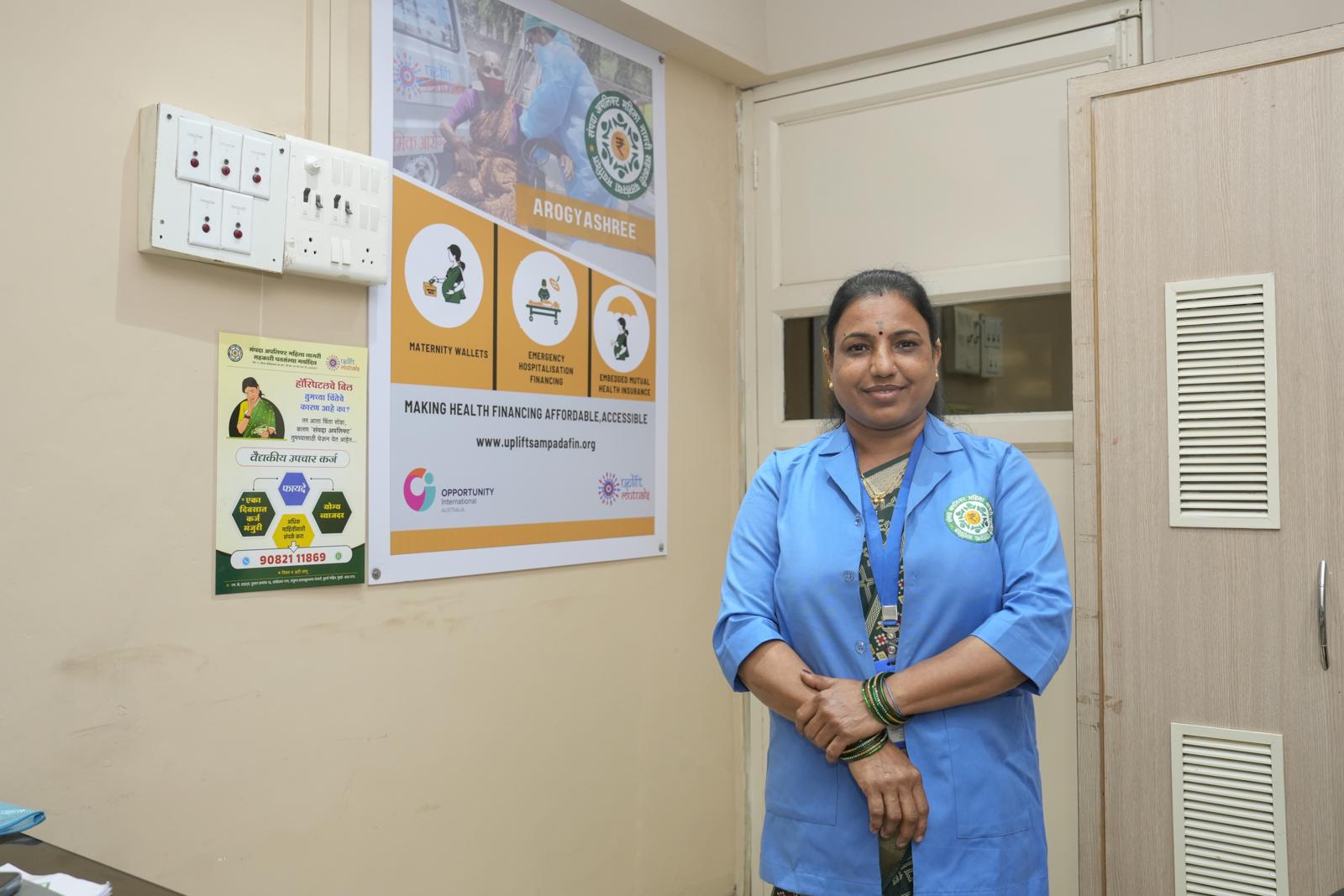
Lending in retail for health events, without collateral, is high risk. Our model understands this risk, and hence our partnership with Uplift Mutuals, which has been working on a doorstep model of delivering primary healthcare services and has, since 2004, pioneered the 24×7 medical helpline, navigation support and access to low-cost medicines.
This, coupled with the medical underwriting that reviews every loan’s eligibility, builds a system that ensures the member living in the slums of Pune and Mumbai has the access to care and the information she needs.
This has helped Sampada in lowering the loan size, and in ensuring that the health outcome of the member is trackable.
The Health + Financing Hub is a joint undertaking of the two. Neither could run it alone, and neither is a department of the other.
The seven services
Each service is set out twice. What the member gets is the reason she uses it. What it changes about the borrowing is why it belongs in a lending model at all. Both are true of every service here.
Teleconsultation and health camps
THE SETTLEMENT
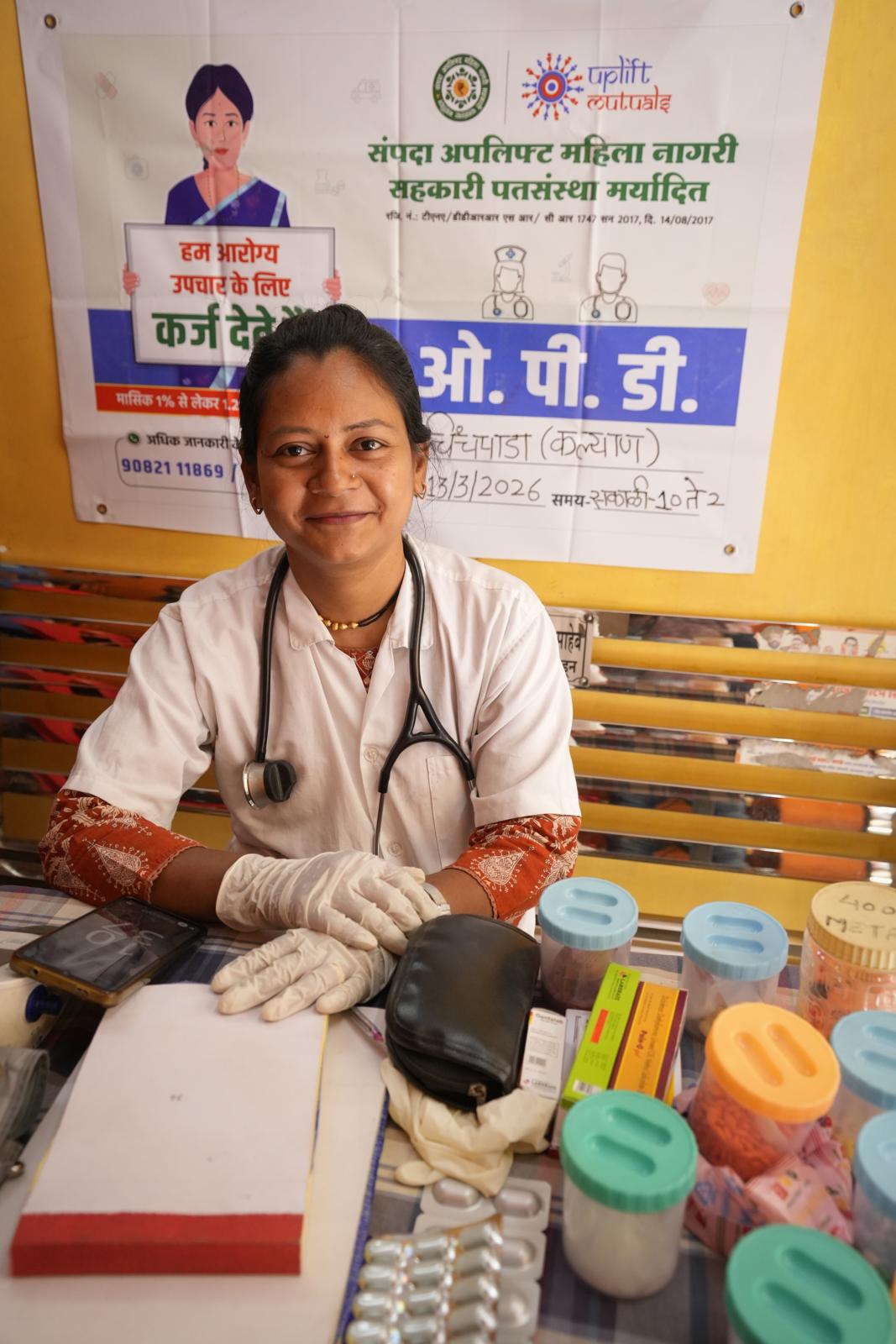
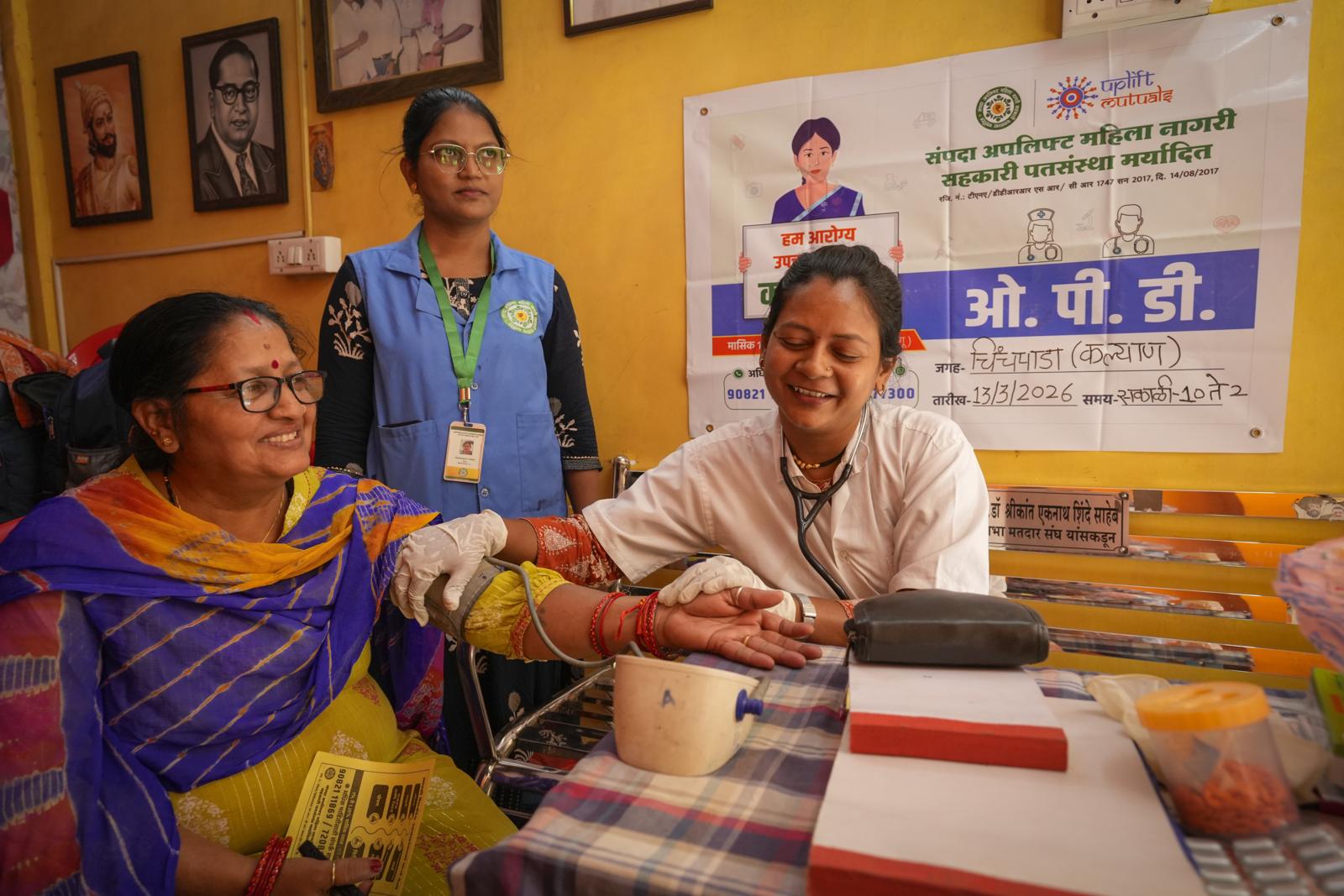
A doctor by phone or video for every loan applicant and co-applicant, and health camps in the settlement for screening and check-ups, including multi-specialty camps planned around what the doctors are seeing. Health workers visit homes to follow up.
Small things get found before they become expensive things. And a member who can reach a doctor does not have to accept the first estimate she is handed — she can ask someone whether the number is fair.
24×7 doctor-led helpline
A doctor on the phone at two in the morning, when the question is whether to go to a hospital at all, and which one. Every member card carries the number. For women expecting a baby, the helpline doctor also follows up on nutrition and post-natal care.
The wrong admission at the wrong hospital is where most large bills begin. A phone call at the right hour changes the size of the bill before there is a bill, which is the cheapest moment to change it.
Medical navigation support
QUICKLY
Clear information on available treatments, healthcare providers, approximate costs, addresses and opening hours, which saves critical time in a medical emergency.
A family handling a serious illness for the first time is making the most expensive decision of its life with no map. Navigation turns a frightening number into a known one, and a known number can be planned for instead of borrowed against in panic.
Network care providers
BY A DOCTOR
Members can choose affordable hospitals, diagnostic centres and pharmacies with transparent pricing and, in most cases, discounted rates. In-house doctors manage these partnerships so that members receive the right treatment at the right cost.
A smaller loan, or none. Cutting the price cuts what has to be borrowed, before anything is borrowed. The member sees the two prices side by side and understands why the second one is the one to plan against.
Access to public health entitlements
NO LOAN AT ALL
The scheme she was already entitled to and did not know about, or could not complete the paperwork for. We work alongside the ASHA worker in every community, and with the government’s maternal and child health, tuberculosis and family planning programmes.
A family will otherwise borrow at 60–120% a year for something the state would have paid for. When a scheme covers the treatment, the loan is smaller or not needed at all.
Low-cost medicines and investigations
NOT THE CRISIS
Lower prices on medicines, and lower rates on the blood work and scans that an ordinary pregnancy or a long-term condition demands month after month.
It is the recurring cost, not the single crisis, that quietly empties a household’s savings. Knowing what the months ahead will cost is what makes a savings plan realistic — and a wallet that stays on target is a loan that never has to be taken.
Chronic disease management
FOLLOW-UP
Blood pressure and diabetes screening at the health camps, and ongoing care for the conditions that do not present as emergencies until the day they do. Children under five in the household are checked for vaccination at the same visits.
A member whose blood pressure is controlled is less likely to need a hospital, and so less likely to need a loan. It is the one service whose worth shows up mostly in the events that never happen.
What this looked like in one quarter
These are the figures for a single quarter. We give them as one quarter rather than as a yearly rate, because the hubs opened at different times and the services do not yet run at the same level in all five.
in April and May 2026, inside the communities. From June, consultations moved to phone and video
including 12 multi-specialty camps, planned around what the doctors were seeing
3,879 women and 1,663 men, at clinics, camps and loan assessments
313 women and 133 men, sent on to a place that could treat them properly
to find and counsel pregnant women and mothers of children under five
a required step for every family seeking a health loan, not a sample
applicants and co-applicants, screened for conditions they did not know they had
through antenatal care, with 1,920 mothers followed up after delivery
At least 45% less out of pocket.
Seven services, each taking a different piece off the bill: the doctor who checked the estimate, the scheme that was claimed, the price that was agreed in advance, the admission that did not need to happen. Against what the same illness would have cost the household outside the hub, members see their out-of-pocket healthcare spending fall by 45% at minimum.
It is stated as a minimum and not an average, so that the strongest cases do not carry the figure.
BASELINE SURVEY OF 38,900 HOUSEHOLDS IN MUMBAI, KALYAN AND DOMBIVLI · 2021–22